
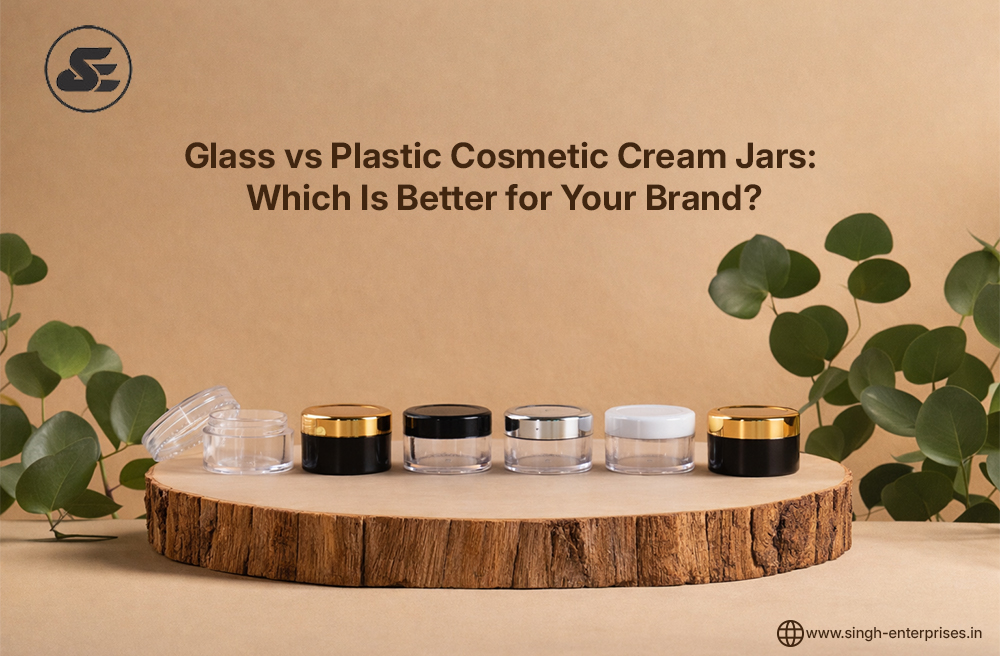
When choosing packaging for your skincare or cosmetic line, the jar you pick does more than hold product — it communicates your brand’s values, affects product performance, and impacts cost and logistics. In this cosmetic packaging comparison, we’ll break down the strengths and trade-offs of glass cream jars and plastic cream jars so you can decide which option is best for your brand. Keywords such as glass cream jars, plastic cream jars, cosmetic packaging comparison, and Cosmetic Cream Jars are used throughout to help your content rank and inform buyers searching for options from suppliers like Singh Enterprises.
Look & Feel: First impressions matter
Glass cream jars are synonymous with luxury. Their weight, clarity, and ability to be molded into elegant shapes make them ideal for premium moisturizers, serums, and night creams. A glass jar signals quality and permanence — consumers often perceive products in glass as higher-end.
Plastic cream jars, on the other hand, offer a modern and versatile aesthetic. Advances in plastics allow high-gloss finishes, translucent looks, and unique shapes that mimic glass while remaining lightweight. For mass-market or active-lifestyle brands, plastic can feel fresh and practical.
Product protection & performance
Barrier properties and chemical compatibility are crucial.
- Glass is inert and non-reactive, so it won’t interact with active ingredients (vitamins, acids, essential oils). This makes glass cream jars ideal for formulas where stability is a priority.
- Plastic varies by polymer. High-density polyethylene (HDPE) and polypropylene (PP) are common and generally chemically compatible with many creams, but some solvents or essential oils can leach compounds from lower-grade plastics if the formulation isn’t compatible.
If your product contains highly active or oil-based ingredients, the cosmetic packaging comparison usually favors glass for long-term stability.
Weight, shipping & breakage
Glass is heavy and fragile — two realities that increase shipping costs and require better protective packaging. For international distribution or subscription-box models where shipping efficiency matters, weight can add up.
Plastic jars are lightweight, durable, and less likely to break in transit. If you sell through e-commerce and need to optimize shipping costs, plastic cream jars are a pragmatic choice.
Sustainability & consumer perception
Sustainability is increasingly front-and-center for cosmetic buyers.
- Glass is fully recyclable and can be reused (e.g., by consumers for storage). Many consumers see glass as more “green” because it’s inert and recyclable without downcycling. However, glass production is energy-intensive and heavier logistics increase carbon emissions.
- Plastic recyclability depends on resin type and local recycling streams. Some plastics are recyclable (like PP), but contamination and low recycling rates for small cosmetic containers can be a challenge. That said, innovations such as PCR (post-consumer recycled) plastics, refillable systems, and lightweighting are improving plastic’s eco-credentials.
A careful cosmetic packaging comparison will evaluate life-cycle impacts, not just material perception. If sustainability is central to your brand story, consider glass or high-quality PCR plastic plus a visible recycling/refill program.
Cost & minimum order quantities (MOQs)
Plastic is generally cheaper to produce and quicker to mold. Injection-molded plastic jars often have lower unit costs, especially at high volumes, and typically lower MOQs than blown or molded glass.
Glass jars are costlier — tooling, heavier material costs, and more delicate handling raise the price per unit. But for boutique brands where margin per unit is higher and perceived value matters, the extra cost may be justified.
Customization & printing
Both materials support branding, but techniques differ:
- Glass cream jars shine with screen-printing, hot-stamping, frosted finishes, and metal caps or collars. Glass pairs beautifully with luxe labels and embossing.
- Plastic cream jars allow for varied colors, translucent effects, tamper-evident features, and integral molded shapes. Some plastics can be in-mold labeled for durable graphics.
Consider how your label, logo, and tactile brand elements will translate on glass vs plastic when doing your cosmetic packaging comparison.
Regulatory & safety considerations
Glass is inert and generally helps meet regulatory needs for sensitive formulations. Plastic requires careful selection of food- and cosmetic-grade resins and may need migration testing with potent actives. If your product will be sold across multiple countries, check regulatory requirements for packaging materials in each market.
User experience & functionality
User convenience matters. Wide-mouth jars are common for creams but may require clean fingers to avoid contamination. Airless pump systems reduce contamination and are typically plastic — they offer a premium functional benefit, especially for active formulations sensitive to oxidation.
If elegance plus the ritual of application is part of your brand (e.g., night creams, balms), a glass cream jar with a metal or bamboo lid can enhance the unboxing experience. If portability and robustness are priorities (gym, travel-friendly), plastic cream jars win.
Which should your brand choose?
There’s no single correct answer — the right choice depends on your brand positioning and practical constraints:
- Choose glass cream jars if you prioritize luxury, ingredient stability, recyclability perception, and a premium unboxing experience. Glass is ideal for high-margin lines where the jar helps sell the product.
- Choose plastic cream jars if you need cost efficiency, light-weight shipping, increased durability, or innovative shapes and functionality (airless options). Plastic works well for active, affordable, or travel-focused ranges.
Many brands adopt a hybrid approach: flagship SKUs in glass and travel or starter sizes in plastic. Refillable systems or refill pouches can pair a durable plastic pump or glass jar with a low-waste refill to balance perception and sustainability.
Final thoughts — and where to source them
When building your product line, include material compatibility testing, order prototypes, and consider lifecycle impacts. Whether you type glass cream jars or plastic cream jars into your supplier search, use a holistic cosmetic packaging comparison that includes cost, branding, supply-chain logistics, and consumer expectations.
If you’re sourcing packaging for your brand, Singh Enterprises offers a wide range of Cosmetic Cream Jars — from high-clarity glass jars with luxe caps to durable, lightweight plastic jars in multiple finishes. Speak to a packaging specialist to request samples and to run a packaging compatibility check for your formulation.
Choosing the right jar is about aligning product chemistry, customer perception, and practical logistics. Make that match, and your packaging will do more than hold cream — it will sell your brand.


